AI Mura · Presidential Archive of Kazakhstan
Visitors get answers and see the original archive source
Virtual exhibition guide: questions, explanations and links to archive documents.
Discuss a similar project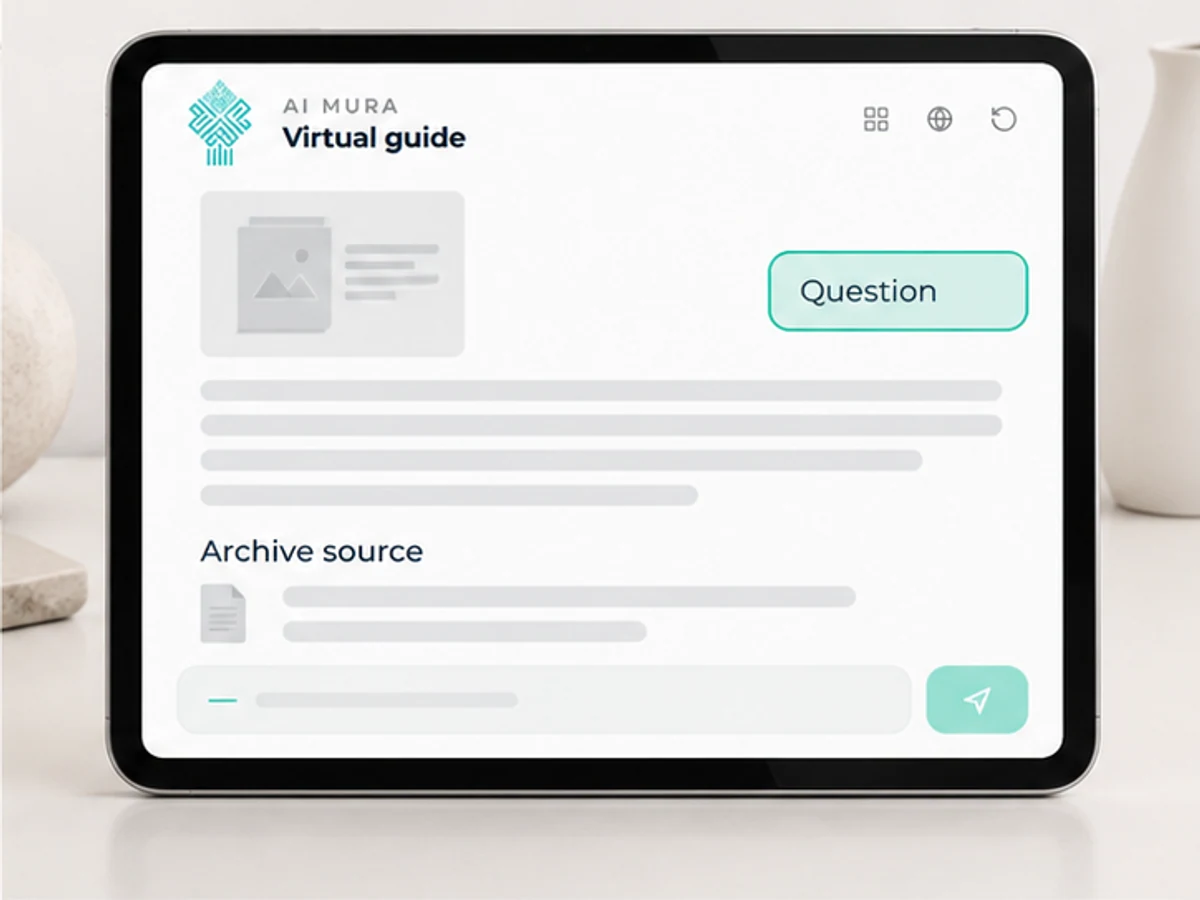
Original project materials
In this article
The Archive's challenge
The Archive of the President of the Republic of Kazakhstan already had virtual exhibitions: selected documents, images, captions and thematic sections. A visitor without specialist knowledge may not understand why a particular document matters or how it relates to other material.
AI Mura's task was to extend exploration of the collection through questions. Visitors needed a way to clarify an exhibit's meaning and see the source behind the explanation.
What Sailet developed
Together with the exhibition team, we examined the structure of the collections and how their materials should be used. Sailet designed the visitor journey and developed a virtual guide for publicly available exhibition material.
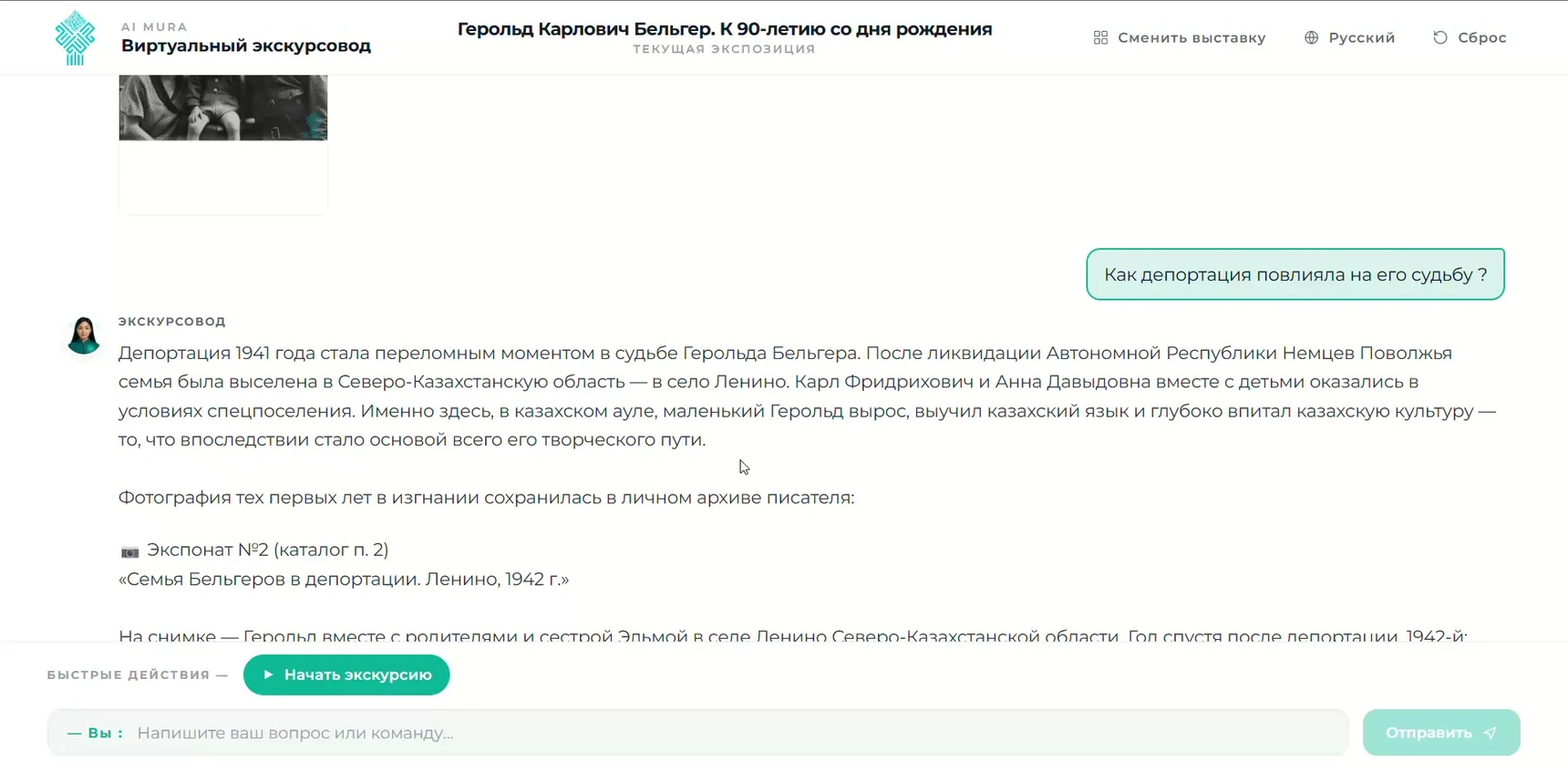
A visitor chooses an exhibition, starts a guided tour or asks a question directly. The guide explains the topic and connects its answer to a specific exhibit: a photograph, document or description. The original image and archival details remain available alongside the explanation. This matters particularly when handwritten corrections or details of a document carry meaning of their own.
The guide supports dialogue in Kazakh, Russian and English. Visitors can ask follow-up questions in their preferred language, while the collection's material provides the basis for the answer.
The exhibition-stage result
The version demonstrated in June 2026 contained three thematic exhibitions and 160 exhibits: Herold Belger's biography, the history of Baikonur and Kazakhstan's state symbols. These figures describe the demonstration collection. AI Mura was presented at Digital Archive EXPO during the Third International Congress of Archivists, and the Archive itself announced the solution.
The prepared collections gained another way to introduce their content. A visitor can move from a guided narrative to a personal question, receive an explanation and open the original source. The exhibition team can use existing material for both tours and open dialogue. Public exhibition material thus becomes a basis for independent exploration of the archive and answers to visitors' questions.