An existing AI service or a custom solution: how to decide
Compare an existing AI service, integration and custom development by task, data, quality and total cost. What to check before budgeting for implementation.
In this article
Choosing AI starts with the operation you want to improve. Finding a suitable product, extracting information from a document, drafting a response and helping a student understand a mistake are different tasks. Each needs its own data, quality checks and rules for handling errors.
Describe the task without naming a technology
Explain what the system receives, what it must return and who uses the result. Clarify whether manual review is acceptable and what happens if there is an error. If a clear rule or an existing system feature can solve the task, check that option first.
Then collect examples from real work: routine ones, difficult ones and cases where the system should not answer confidently. For documents, these could include an illegible scan or a missing field; for product selection, contradictory customer requirements.
Consider three ways to implement it
| Option | When to investigate it | What to establish first |
|---|---|---|
| Existing service | The required workflow is available in the product | Quality on your examples, data terms, export and cost at your workload |
| Existing model with custom integration | The model fits, but you need your own data, interface, roles and system connections | Access boundaries, answer checking, error monitoring and dependence on the supplier |
| Custom component development | Available options fail to meet a material requirement | Which part genuinely needs development and how its advantage will be demonstrated |
A custom application does not imply a custom model. It may use external models and existing libraries. Separately document code rights, component terms, where data is processed and the ability to change suppliers.
Check quality before scaling
For extracting document details, you can measure the accuracy of each required field. For document search, check whether a relevant source is found and whether the answer matches it. For an employee assistant, measure the share of outputs accepted without substantial editing. Choose a measure suited to the process.
If you need Russian, Kazakh, English or Spanish, test each language using examples from your field. A language appearing on a feature list does not prove quality for surnames, industry terms and documents.
Define in advance when a human must take over. A useful solution needs a clear way to signal insufficient information and avoid a risky action without review.
Compare the full cost
Include configuration or development, integrations, data preparation, model use, infrastructure, quality control and support. Compare options over the same number of operations and time horizon. Assess the time employees spend checking answers separately.
Freed-up hours may let the team handle more enquiries without necessarily reducing costs. To assess the benefit, explain precisely how work will change and separate confirmed data from assumptions. There is no universal payback period that determines the right implementation approach.
Agree the first stage’s boundaries
Before implementing AI, define the workflow, test examples, acceptable errors, data source and person responsible for the decision. The first stage should establish whether the approach is suitable for real work, as well as the cost and constraints of further development.
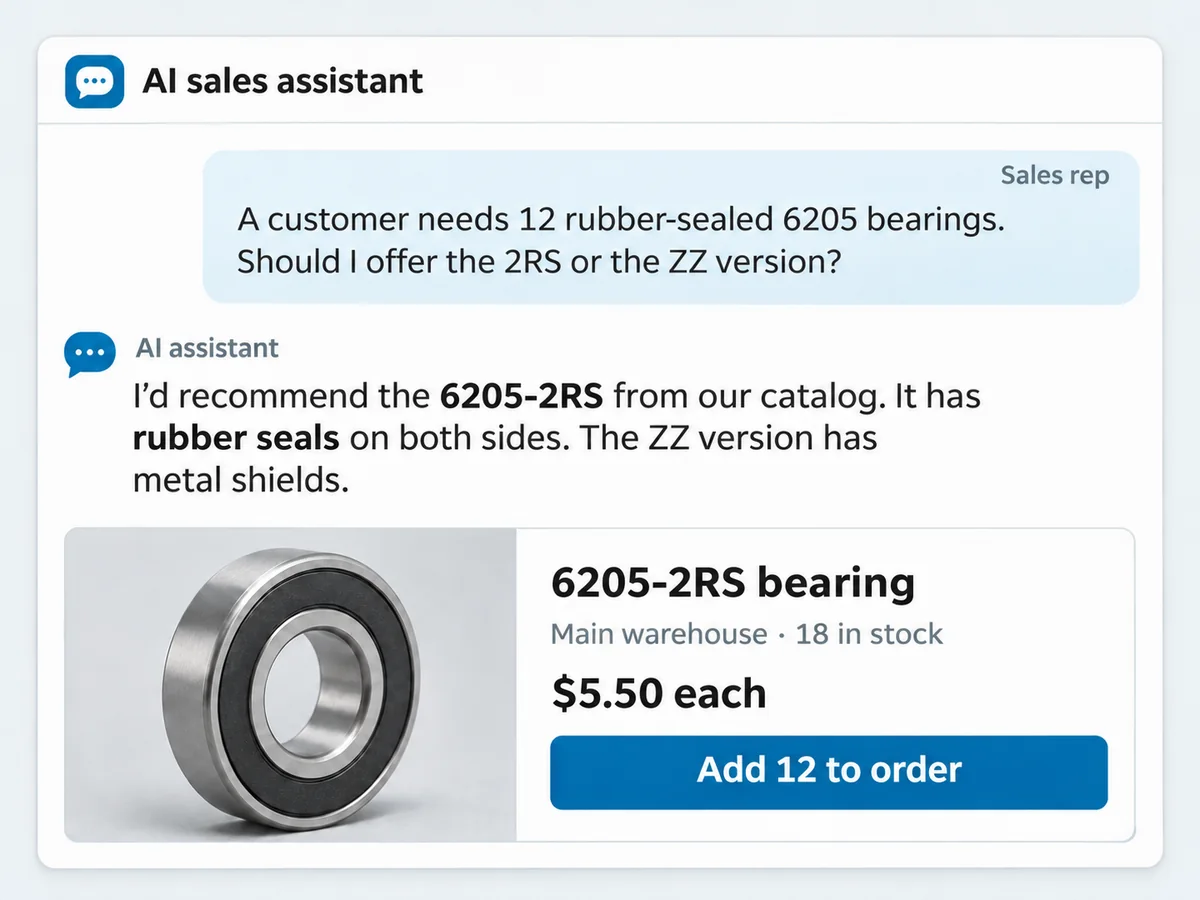
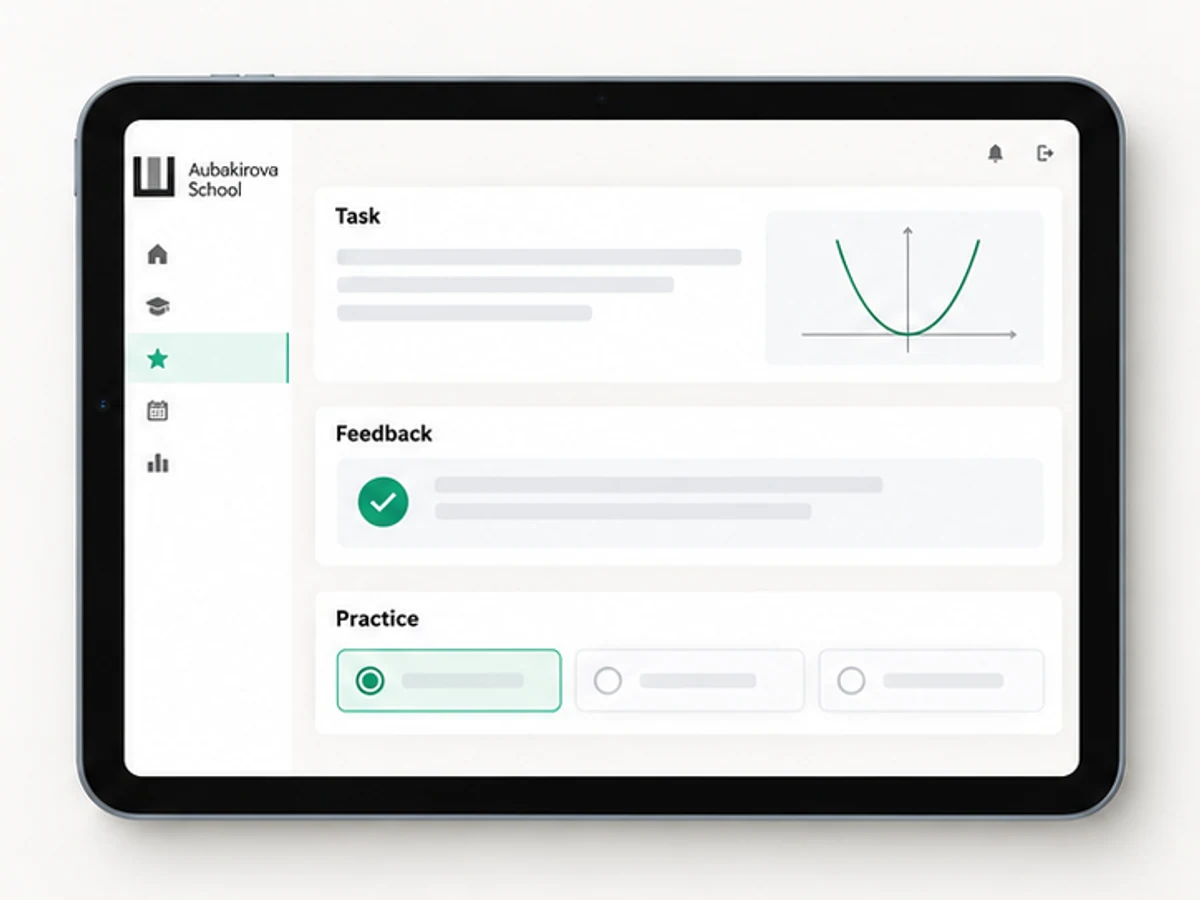
The working scenario determines the solution’s scope. At an industrial equipment supplier, product selection and quotation tools connect with 1C and the CRM. In AShJA, AI is part of assignments, assessment against criteria and participant portals: students receive feedback and teachers see their progress. In both cases, the complete workflow matters.