
AShJA: individual learning practice with AI and feedback
How Sailet built a platform for Zhaniya Aubakirova School with assignments, assessment criteria and student and teacher portals. Task, solution and outcome.
In this article
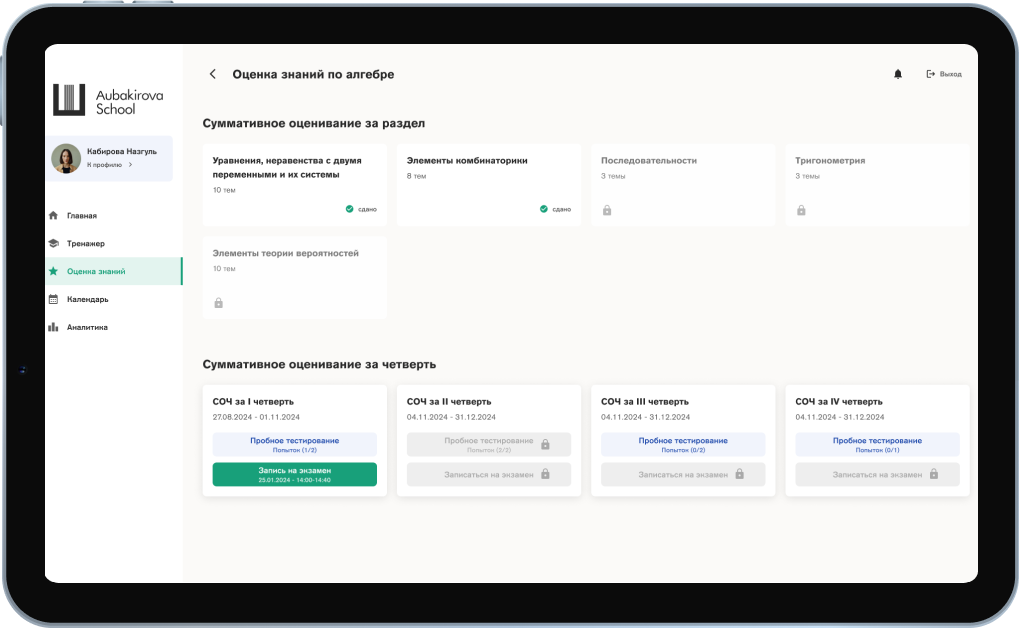
Client: Zhaniya Aubakirova School. Area: education. Project period: 2024–2026. Sailet’s role: building an educational platform with AI for individual learning practice.
Students receive feedback on their answers, while teachers see how their work progresses. Assignments, assessment against criteria and participant portals are connected within one platform.
The task: support individual practice
Within a single topic, students may need different work: revising material, understanding a mistake or moving on to a more challenging assignment. The school needed a digital tool connecting a student’s practice with a teacher’s oversight.
A complete learning scenario matters here: a student completes an assignment, receives feedback and continues working on the topic; the teacher sees the completion history. This scenario determined the platform’s scope.
What was implemented
- Assignments and individual practice. Work is organised by learning topic.
- Assessment against defined criteria. AI is used in assessing answers and preparing feedback.
- Continued work on a topic. A student’s answer informs further practice.
- Student and teacher portals. Participants see information relevant to their work and the assignment history.
AI is part of the learning process alongside data, assignments and interfaces. This makes it possible to discuss a concrete platform outcome: the feedback a student receives and what a teacher can see.
The outcome for participants
For students: practice with feedback on completed assignments and the ability to keep working on the material. For teachers: visibility of progress and work history in one interface. For the school: its own platform bringing these scenarios together.
The sources describe the implemented functional scope. They do not provide quantitative measures of academic performance or teacher time saved.
Applying this experience to a new brief
For an educational product, describe the student, teacher and administrator roles separately. Then connect their actions in a testable scenario: assignment, answer, feedback, continued practice and review of the history.
Before implementing AI, define the review rules: which answers are acceptable, which errors matter, when a teacher needs to intervene and what data may be used.
Acceptance can include agreed assignments and answers, role behaviour and access to completion history. Changes in learning outcomes require separate observation with a clear method and comparison period.
Sources and visuals
The functional scope is described in the public Sailet case study and the original project article. The illustration is a published interface mock-up from the case study.

