AI in a private school: designing learning practice with feedback
How to define a learning scenario, prepare materials and test AI responses. The teacher's role, the learner's activity history and a separate assessment of educational impact.
In this article
A useful learning scenario with AI begins with a task for the student and teacher. It might provide extra practice on a topic, examine an answer or prepare material for a teacher to review. “Adding AI to the school” defines neither the work nor the quality of its outcome.
This article concerns learning practice. Managing admissions, timetables and administrative enquiries requires a different brief. These areas should not be combined into a single promise to improve the entire school.
Choose the topic and the limits of assistance
Define the learning objective, starting level and permitted types of exercise. Describe the help the student receives: a hint, an explanation of a mistake, an additional example or a suggestion to contact the teacher. Decide in advance when the system must stop responding independently.
After missing classes, a student may need practice on particular topics. This is a possible scenario, not a promise of catching up quickly. Selecting the material and deciding whether the student is ready to move on remain part of educational work.
Prepare materials and criteria
Use agreed educational sources and sample answers. Review correct, partially correct, incorrect and ambiguous solutions with teachers. Specify what the system should notice and how it should explain that to the student.
Check whether the wording is understandable for the age group and whether subject terminology is correct. If teaching takes place in several languages, assess each using the school's real materials. A translated interface does not demonstrate the quality of explanations.
Preserve the teacher's role
Teachers should be able to understand which exercise a student received, how they answered and what feedback the system proposed. They need a way to correct it and refer a disputed question to a person. An automated response must not silently become a final educational assessment.
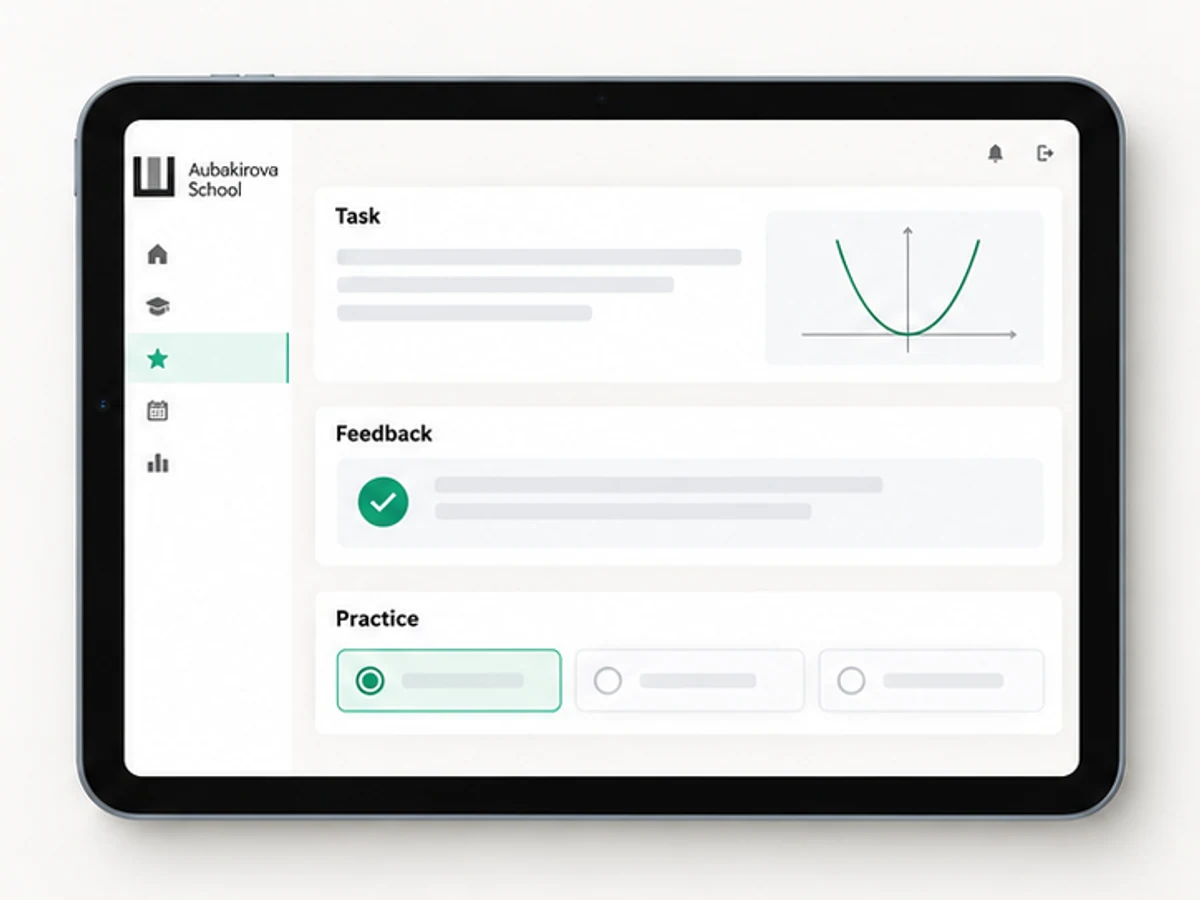
The public ASHZHA case describes exercises, individual practice and checking against criteria: the student receives feedback and the teacher sees the completed work. This documents the stated functional workflow, but does not by itself demonstrate higher attainment or time savings.
Plan for data and errors
Define roles, access and the necessary activity history. Agree with the school on which information is sent to external services and which data-use conditions must be met. Unnecessary personal data does not help test the learning logic.
Test an incomplete answer, an off-topic question, an unavailable external service and an incorrect hint. The system should preserve an understandable work status and allow the teacher to investigate. Handling these exceptions is part of making the scenario ready for use.
Assess the pilot at two levels
First, check whether a student can complete an exercise and understand the response, and whether a teacher can review the work and correct an error. Observe disputed answers, repeated attempts and requests for help.
Then plan a separate assessment of educational impact. Conclusions about knowledge require an appropriate period, criteria and comparable conditions. The number of exercises completed is not equivalent to a demonstrated improvement in learning.
Sailet helps turn an educational task into a technical solution that can be tested. We will begin with your team's topic, materials and criteria. We will compare available tools and define the missing features, integrations and acceptance conditions for a limited stage.