AI in education: how to choose a useful, testable workflow
Student practice, teacher support and administration: define AI’s role, quality criteria and human involvement in an educational system.
In this article
An educational system should support a specific task for a student, teacher or administrator. A useful starting point for AI is therefore: what exactly will it do, and how will participants know whether its output is suitable for that task?
Do not combine different workflows into one promise
Student practice needs exercises, clear feedback and a way to continue learning the topic. Teachers need material preparation and the ability to review proposed output. Administrators need request handling and document work under established rules.
These workflows have different requirements. A teacher can edit a draft before using it. An answer delivered to a student becomes part of their learning experience, so review conditions and escalation to a person must be defined in advance.
Prepare examples and criteria
Choose exercises or requests that occur in practice. Include incomplete, ambiguous and incorrect answers. Agree with the educational team on what counts as appropriate feedback, which wording is unacceptable and when a teacher needs to take part.
If the system works in several languages, test each one using the school’s materials. A language appearing in the interface does not prove correct subject terminology or understanding of the assignment.
Connect AI to the learning process
The output should reach the right participant and remain available in a clear history. Define roles, permissions, material sources and how errors are corrected. Discuss which data is actually necessary and how the school’s requirements for its use will be met.
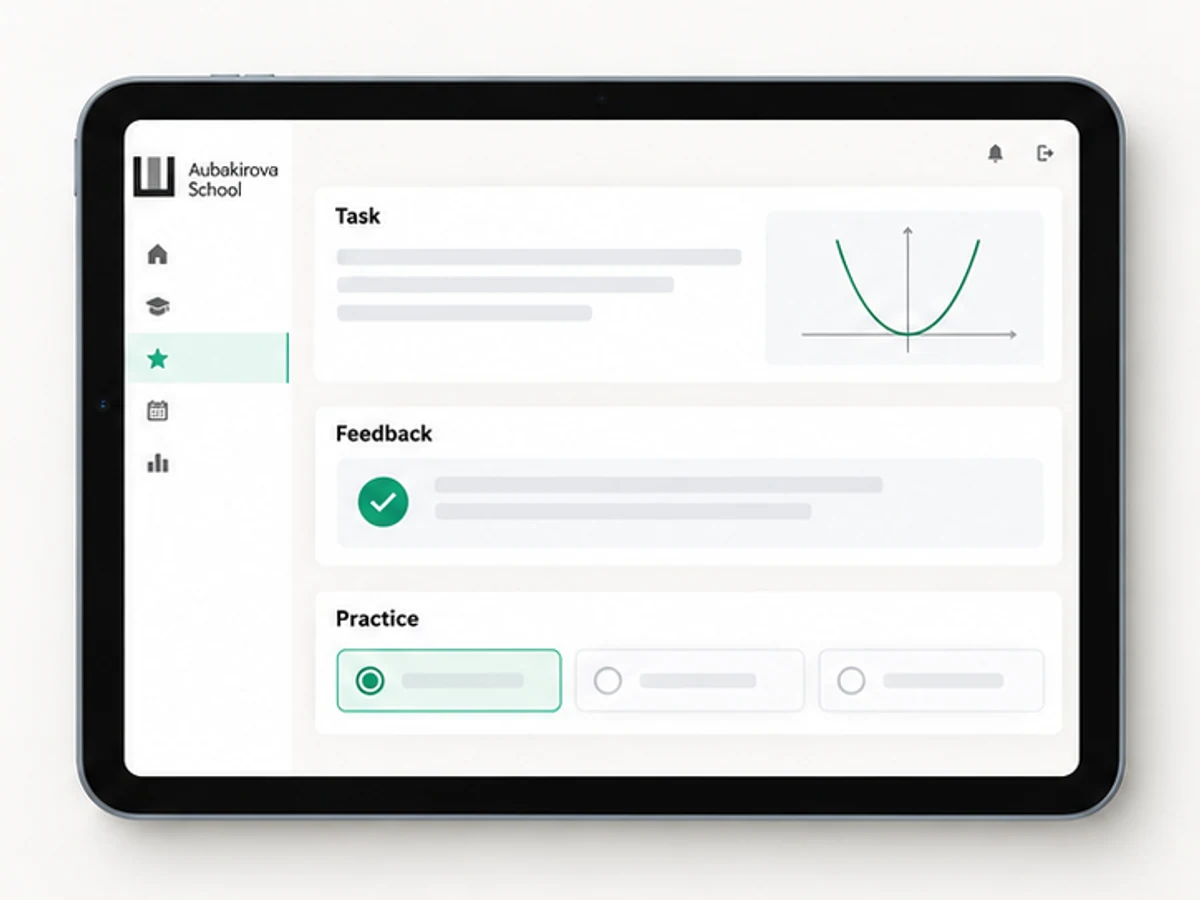
The public ASHZHA case study describes a platform for assignments, individual practice and criteria-based checking. Students receive feedback, while teachers see completion. This functional result must not automatically be converted into a percentage improvement in grades or time saved.
Evaluate use and learning impact separately
First confirm that participants can complete the workflow and understand the feedback. Observe disputed answers, corrections and requests for a teacher’s help. Conclusions about learning outcomes need a separate observation period and evaluation method that accounts for other learning factors.
The first stage can cover one topic or set of exercises. Test existing tools against the same examples; custom development is needed for missing logic, integration or process requirements.
Sailet helps turn an educational idea into a digital workflow that can be verified. Bring the task, learning materials and criteria that matter to your team. We will define the solution’s scope and acceptance conditions.