Metoshi
Historical projectAfter a transaction, the website reflects what happened to the tokens
Connected the web interface to MetaMask and a smart contract: wallet connection, staking, rewards, withdrawal and state updates.
Discuss a similar project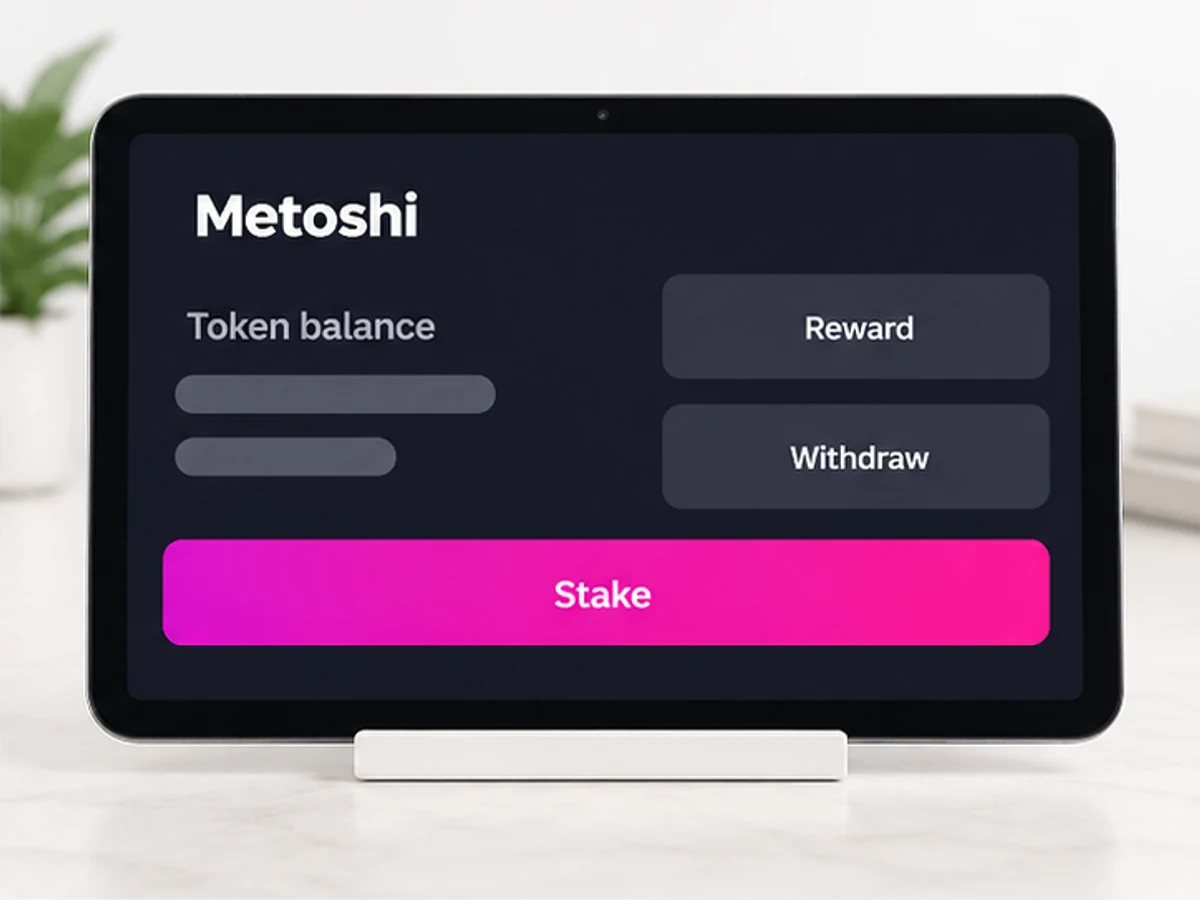
Original project materials
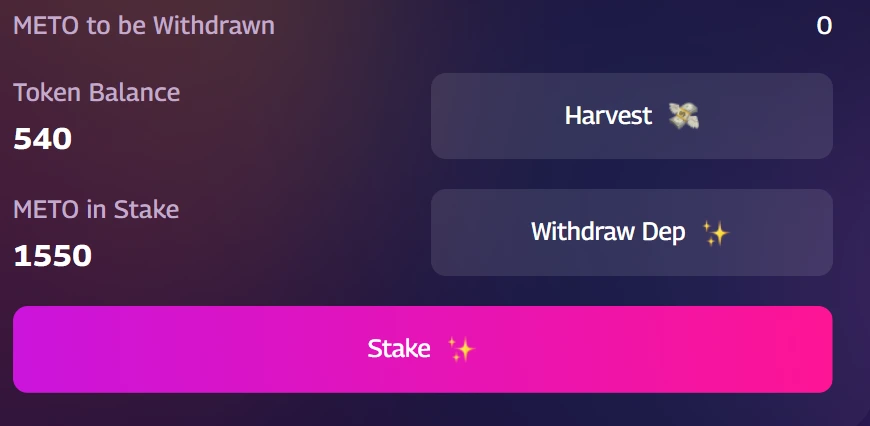
An excerpt from an original January 2022 verification screen. The original values and labels are retained; the upper section showing a rate has been cropped. This is a test session, not a measure of project returns.
In this article
The website needed to lead into product use
Metoshi's first phase introduced the crypto project to a new audience and directed visitors towards buying the token. Sailet developed and published a new website version, which the client reviewed positively on Clutch.
A finance section followed. It needed more than a prominent button: a wallet connection, the user's own data and links between page actions and contract operations.
Wallet balance, stake and reward mean different things
In Metoshi Finance, users enter an amount on the website and confirm the action through MetaMask. Staking, claiming a reward and withdrawing the stake are separate operations.
The wallet balance is not the same as the number of tokens staked. The user's stake, pool parameters and available reward also differ. The interface needs to show the corresponding data after each action, not merely open a confirmation window.
Keeping these states aligned became a significant part of Sailet's work.
Testing the full cycle, including repeated operations
The work log records a bug: after withdrawal, tokens returned to the wallet, but the previous stake remained on the website. A new deposit was then added to that outdated amount.
The team corrected the repeated addition and data updates after actions. This is important for a financial interface: successfully staking once is not enough. The user must be able to withdraw, stake again and see the correct balance.
Original verification screens remain in the archive. Their numbers describe a test scenario, not the project's assets or investment returns.
Confirmed integration work
The result is a published website and an interface for METO operations through MetaMask and the contract. Specific changes are substantiated by the January 2022 work log and replies confirming fixes.
Other wallets, NFT pools and product lines had their own stages of readiness; the available materials do not confirm completion of every listed feature. Sailet's confirmed contribution is the website and the integration described here. This phase did not cover the creation of the entire Metoshi ecosystem: games, exchange, tokens and the full set of smart contracts.
The qualitative conversion improvement mentioned in the review relates to the first website. There is no percentage, and the assessment cannot be transferred to the later finance integration. This case demonstrates a more specific result: the user's action, wallet confirmation and displayed state are aligned within one workflow.