InterLink
DevelopedFrom a freight-rate enquiry to a documented shipment
A customer portal collects cargo details, shows the quotation stage and connects the offer to a transport order and Bitrix24.
Discuss a similar project
Original project materials
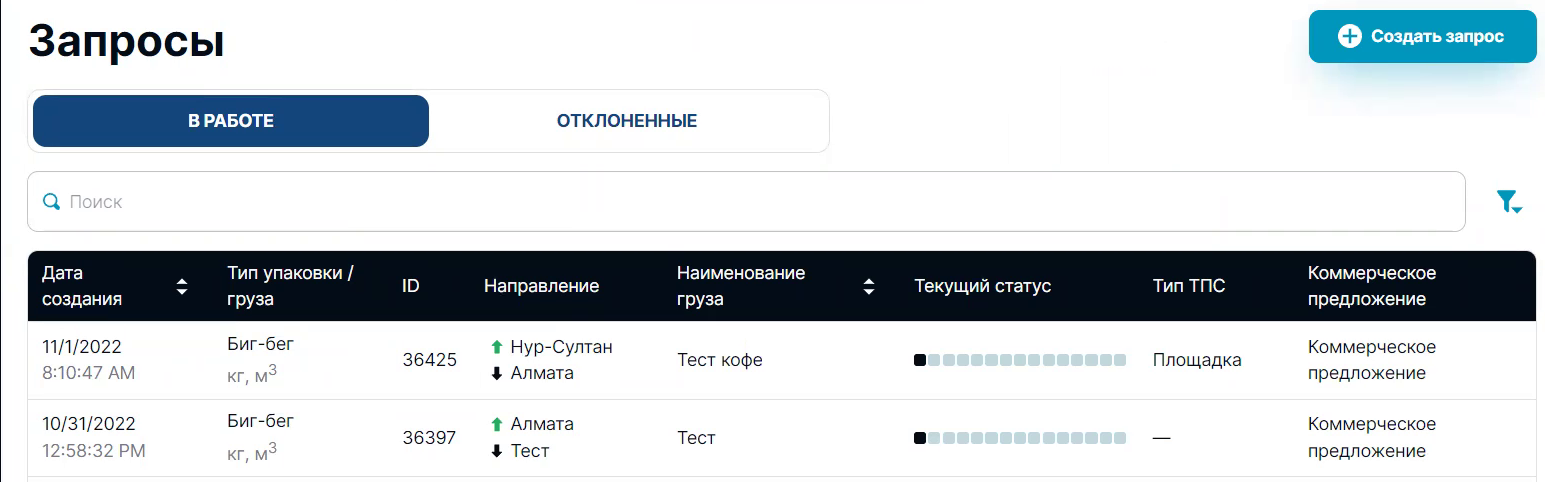
An original demonstration excerpt at 22:00. One row brings together the route, cargo, enquiry state and commercial offer. The screen contains test enquiries, not statistics on real orders.
In this article
A freight price starts with the details
A logistics company needs more than a route and a phone number. Cargo type, packaging, weight, volume, loading method, temperature and other conditions affect the quote. Once the price is agreed, execution requires the sender, recipient, insurance, dates and instructions.
For InterLink, Sailet developed a customer web service that guides users through this preparation. The staff workflow remained in Bitrix24 and was connected to what the customer sees.
Enquiries, offers and transport orders serve different purposes
A customer enters the cargo characteristics and requests a quote. The list shows the route, cargo and processing stage. The relevant record provides access to the commercial offer as a PDF.
A separate transport order captures the parties, addresses, price and conditions needed to arrange the shipment. A prepared quote does not yet mean that the customer has agreed or the cargo is ready to move, so these states are kept separate.
The industry logic was first organised into a matrix of five transport modes. The demonstration covers the road-transport form in particular detail: vehicle type, loading, dangerous goods, temperature requirements and stacking.
The customer service extends the CRM workflow
In the demonstration recording, the same test enquiry appears under the same identifier in the InterLink portal and a Bitrix24 record. The customer gets a clear view of their request while the manager uses a familiar operational tool.
Functions for managing the customer's company employees were also developed. The user journey separates enquiries, documents and shipments. The demonstration shows the preparation of an enquiry and documents; real cargo movements and satellite tracking are outside the confirmed scope.
This division of roles preserves the purpose of the integration: customers do not need to learn the logistics company's internal CRM, while staff receive prepared information in their working context.
What is confirmed
The case records the development phase demonstrated in 2022. The forms, enquiries, opening of an offer and linked CRM record are shown working in a browser, not only in designs. Project matrices and templates also substantiate their structure.
Full acceptance of every variant, current operation and the number of actual shipments are not established. The practical result of this phase is a connected path from cargo parameters to transport documents, without having to explain the original request again at every step.