Ruhani Zhangyru
DevelopedA learning programme with games, progress and moderation
Four game formats, five tests and a team web panel translate the course methodology into manageable mobile activities.
Discuss a similar project
Original project materials
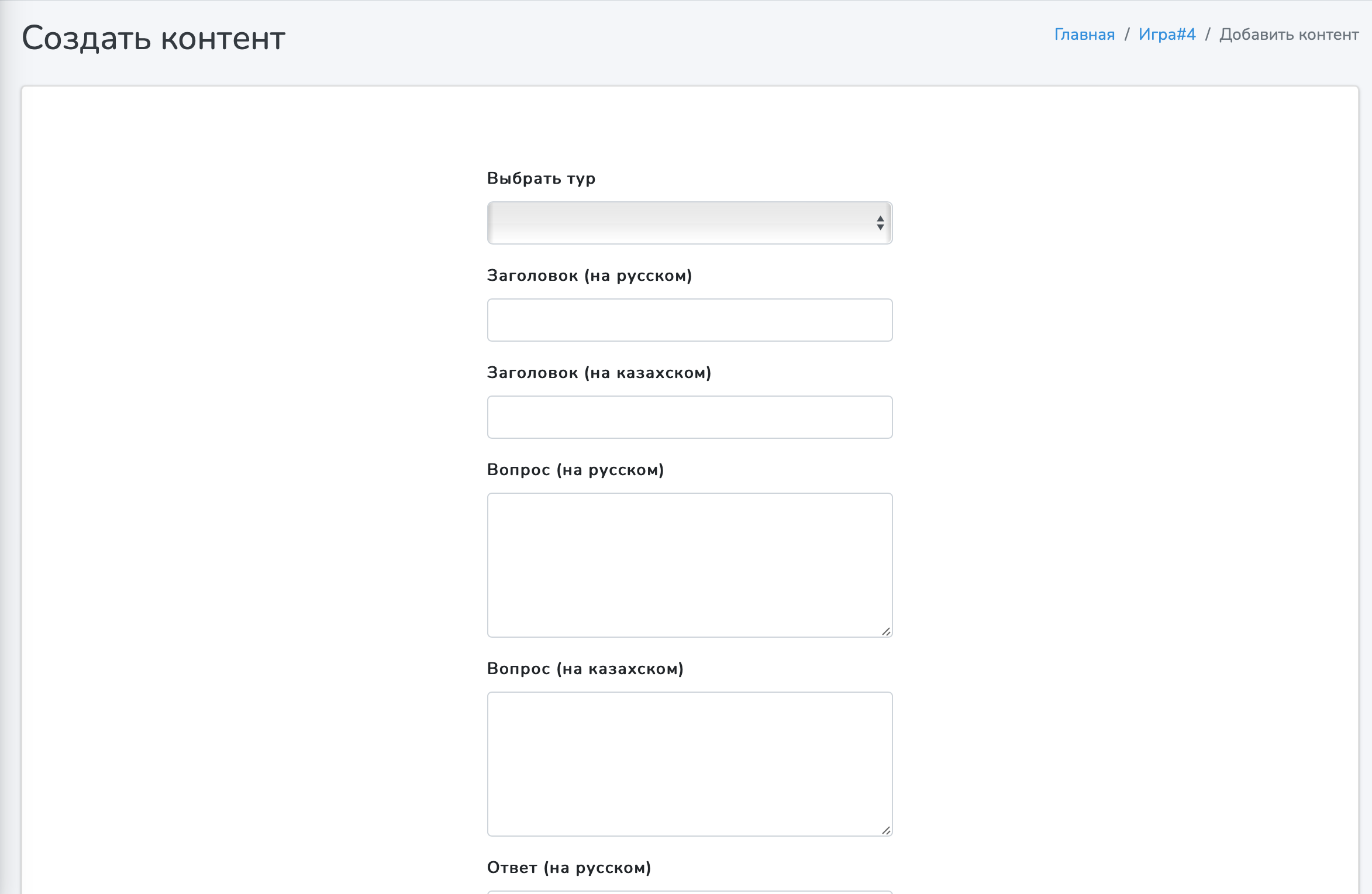
The bilingual quest-activity creation form from the user manual.
In this article
The course continues through participants' actions
The Ruhani Zhangyru Kazakhstan Institute of Public Development wanted to reinforce a ten-day programme through game-based activities. The course was intended for children aged 10–13 at schoolchildren's activity centres.
Sailet developed Upgrade Yourself: a mobile app for completing activities and a web panel for the team that updates content and checks answers. The client's teaching methodology provided the basis for the product rules.
Different activities form one learning path
The app connects four formats: finding a word from an image, introducing oneself on video, selecting interests and completing city-related map activities. Further rounds and tests unlock as the participant progresses.
Users see their overall progress and results. Initial and final self-assessments allow them to repeat the questionnaire specified by the methodology; this is a course mechanism, not proof of measured educational impact.
Russian and Kazakh interfaces support different language groups. The product's value comes from the sequence of activities and the team's actions, not the mere presence of a translation.
Human judgement is included where it is needed
A word can be checked automatically. A video or open-ended answer requires an administrator's decision. The submission enters a queue; approval updates progress and triggers a notification. A rejected answer can be submitted again.
The web panel lets the team edit words and illustrations, questions, tests and round descriptions. Staff can see participants and results and review user submissions and proposals for new activities.
The app is therefore more than a fixed collection of exercises: organisers receive tools for its day-to-day operation.
The course version developed
The archive contains an Android installer, verification materials and a complete 62-page manual. The manual describes the mobile and administration workflows of the development phase completed in 2021.
The final acceptance date and current store availability are not established. Participant numbers, course completion and improvements in results were not measured either. New scenarios from the following year's documents are not included in this scope.
The case shows original manual screens from the 2021 development phase. The result is a mobile participant journey for the learning programme and working tools for the people delivering it.