Aksham
Historical projectDaily spending connected to family budgets and savings goals
A mobile personal-finance product, a web version and service-team tools connect everyday transactions with savings.
Discuss a similar project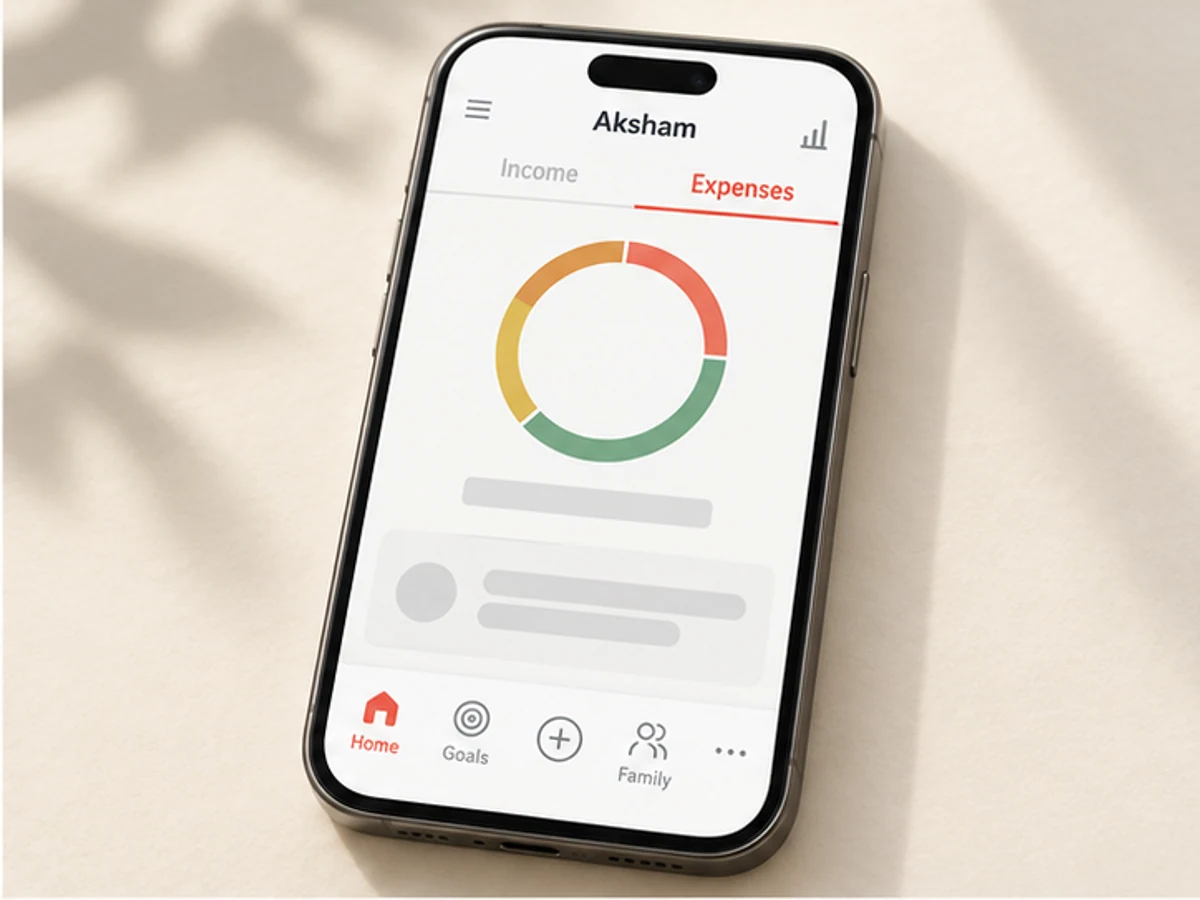
Original project materials
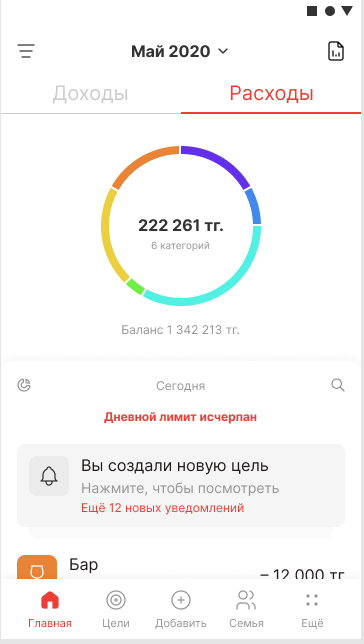
The opening screen connects spending categories, balance, a daily limit and notifications. An original project screen. Amounts are demonstration examples.
Historical self-report without an analytics export; not MAU, subscribers or the current audience.
In this article
The startup needed a reason for people to return every day
Aksham was designed for people without an accounting background. Users needed to record a purchase quickly, check their balance, understand family spending and see how much they had saved towards a goal.
Sailet connected these actions in an iOS and Android app. The implementation history also includes a web version using the same account and administration tools for the product team.
One transaction updates the wider picture
Income or spending is assigned to a wallet and category, retained in the history and included in reports. Templates and recurring transactions support repeated actions. Users can find records by period and filters.
Reporting shows the composition of spending and income, not just the total. The implementation description records Excel and PDF exports. Charts, limits and savings connect an everyday action to the question: what is happening to my money?
Families and goals need their own rules
Family mode includes participants, their transactions and limits. A shared budget cannot be produced simply by adding arbitrary records together: the product needs to account for who an action belongs to and how it appears in personal and family views.
A financial goal has an amount, an image and its own progress. Completed goals remain in an archive. This is savings tracking; it does not imply automatic transfers of money to a bank.
The service team received user management, roles, notifications and audience statistics. Administrators and operators have different access. Work after registration formed part of the product alongside the customer screens.
A historical launch with real users
Sailet's published case reports more than 4,000 users in the first couple of months. This is the team's own account of the launch: the archive reviewed does not contain the exact calendar period or an analytics export. The figure does not mean paying subscribers or monthly active users.
The development result is a connected financial service where recording purchases, family mode, goals and reports operate under one account.
Current app availability, retention and revenue are not confirmed. Specific bank integrations are also not presented as verified: mentions in early materials are insufficient to establish a working connection with each bank.